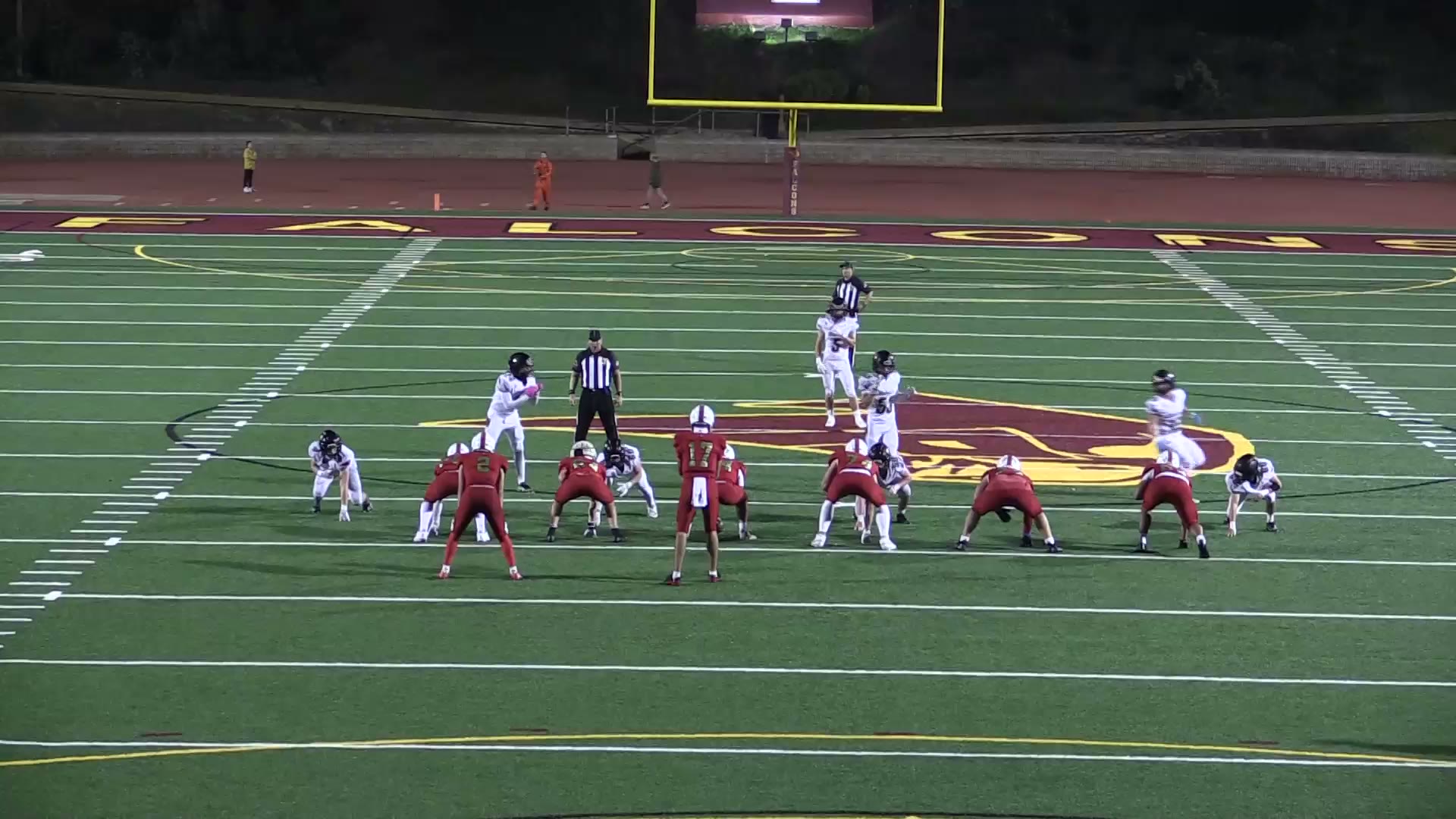
Eagles (SFCHS) vs Bishops School · Deep Coverage & Run Support · 264 Clips Analyzed
From TURBO, you must be at 12+ yards depth pre-snap. F JAILBREAK is a vertical route by the flex/slot receiver. This is designed to beat a single-high safety. If you're playing single-high and they show TURBO, you need to rotate to a 2-high look. Communicate immediately: "TURBO — TWO DEEP." Take the deep half away from the F side and trust the CB underneath.
STACK = 100% pass. Rotate deep IMMEDIATELY on the snap. NINER is a 9-route (fade to corner of end zone). From TURBO STACK, receivers are stacked and releasing vertically. You must take the deep-middle or deep-half responsibility so your CB can play the corner route underneath. Don't bite on any run fake from STACK — it doesn't exist.
Y SPECIAL A JERK is a double-move crossing route — the receiver fakes one direction then breaks the opposite way across the field. This attacks your zone rotation: if you over-rotate to help on one side, the JERK breaks back the other way into vacated space. Play the deep middle of the field, don't commit too early, and be ready to rotate on the second break, not the first.
B PARROT runs left — be ready to fill from the right side (backside safety run support). When B PARROT hits the gap, the RB cuts behind the guard pull and bounces outside. If the front-line pursuit over-runs the play, the RB sprints into open space and you're the only one left. Don't cheat into the box pre-snap — if you're up in the box and B PARROT bounces outside, you're already out of the play. Stay at safety depth until the ball commits to a gap.
No hesitation. The snap of the ball = you're dropping to deep half. Communicate "TWO DEEP" before the snap. Your CB is playing the corner route — you're protecting the post. Don't let anything go over you.
TURBO is their shot-play package — F JAILBREAK AND NINER both came from here. Signal "TURBO" immediately. Get to your depth before the snap. You and the SS split the deep field. No single-high on TURBO.
Trio is run-heavy but not run-certain. Creep down to 9 yards and be ready to fill on B PARROT or DINO. But stay on your run-support landmarks — don't come all the way into the box. They will pass from Trio too.
Under TEA is their heaviest run formation. Get your weight forward. Watch for B PARROT LEAD — the RB hits the A-gap, you fill the B-gap cutback from the backside. Don't allow a backside cutback to get past the second level.
SPLIT is mixed. Their 67-yard TD (B PARROT) came out of SPLIT with TRAIN motion. From SPLIT, don't creep too early — wait for the motion tell and then rotate accordingly.
YAMAHA motion = run. Take one step forward and toward the line. Be ready to fill the cutback or hit the alley on the edge. The snap is coming soon — get your run-support read ready.
BUS motion = pass is coming. Take two steps back and into your deep coverage key. Don't be caught at 8 yards on a BUS motion snap — the route is coming deep. Get to 13+ yards.
Small sample, but BOUNCE is also a run tell. Follow the YAMAHA protocol — step forward, fill the run alley.
The 67-yard TD run came with TRAIN motion from Split. Don't commit to run OR pass on TRAIN. Play your keys from depth. If you cheated forward and B PARROT cuts back, that's your fault.
From depth, count the number of receivers on each side of the formation. Stack or Trips left = they're setting up F JAILBREAK to the side. Trips right = they're setting up OSCAR or NINER. Know where the most receivers are before the snap.
STACK (receivers stacked vertically behind each other) = always pass. SPREAD (5 wide or spaced) = shot plays. COMPRESSED (bunched, close together) = pick routes and crossing game. ID the shape of the formation, not just the name.
Watch where the QB looks before the snap. If he stares at a receiver for more than 1 second, the ball is going there. Look off your initial read — if his eyes go to the boundary CB, rotate that direction. React to his pre-snap eyes, not your instinct.
The TE or H-back location tells you the run side. If the TE is on the right, the run is probably right. If the TE releases into a route, it's likely a pass. TE blocking = run key. TE releasing = pass key and potential receiver for you to track.
TURBO STACK — FS was at 9 yards pre-snap (single-high shell). The seam receiver ran past the FS in 2 seconds. STACK formation requires 12+ yards minimum depth. When you see STACK, call "DEEP" and back-pedal immediately. You cannot close on a seam route from 9 yards — 31-yard TD.
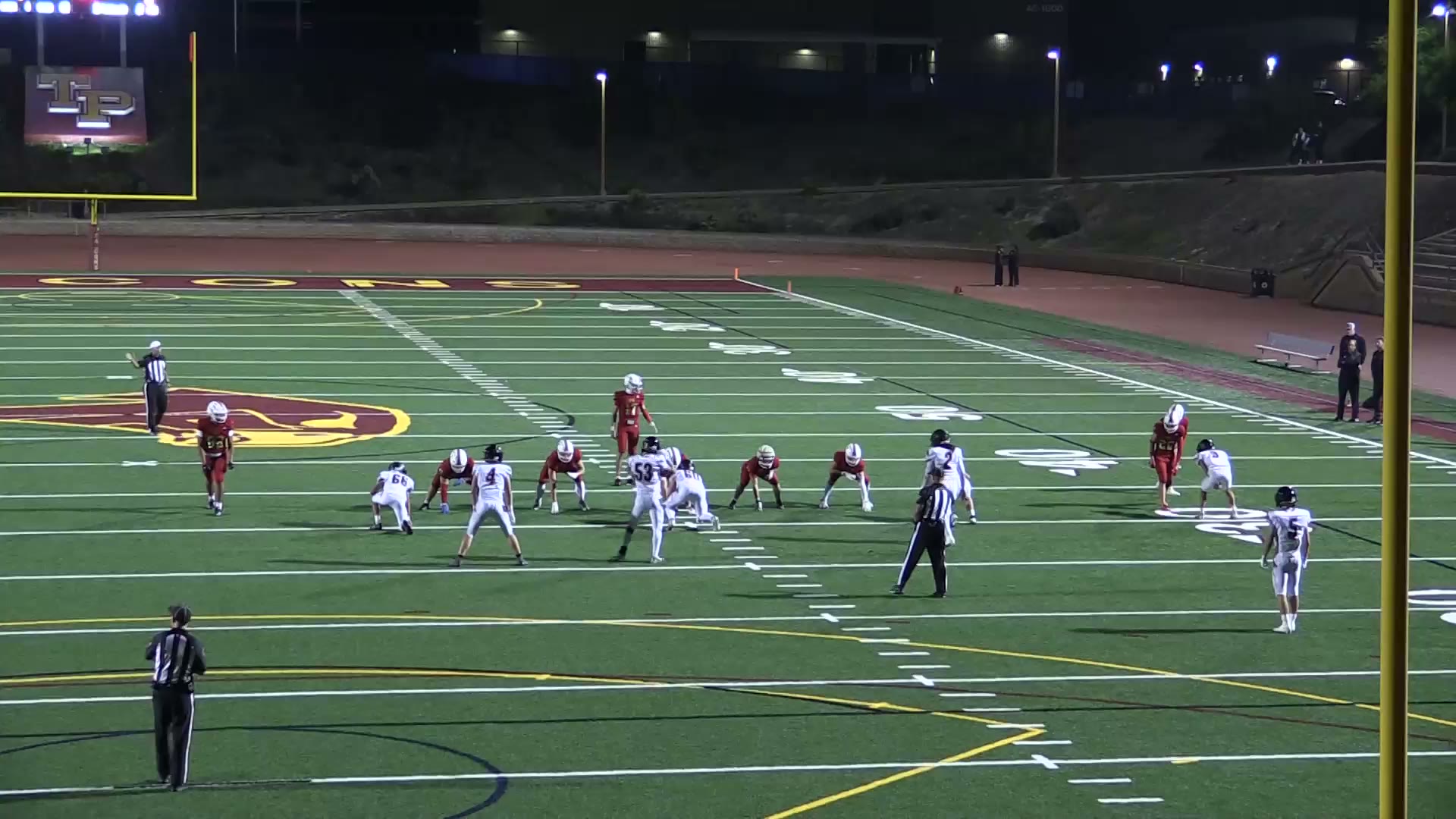
TURBO formation — the F receiver (flex) aligned wide. FS rotated to the inside receiver and left the deep boundary side open. F JAILBREAK hit the vertical route for 46 yards. TURBO = count the receivers to each side and shade toward the 3-receiver side. Keep your eyes on the F's release — if he goes vertical, you have him.
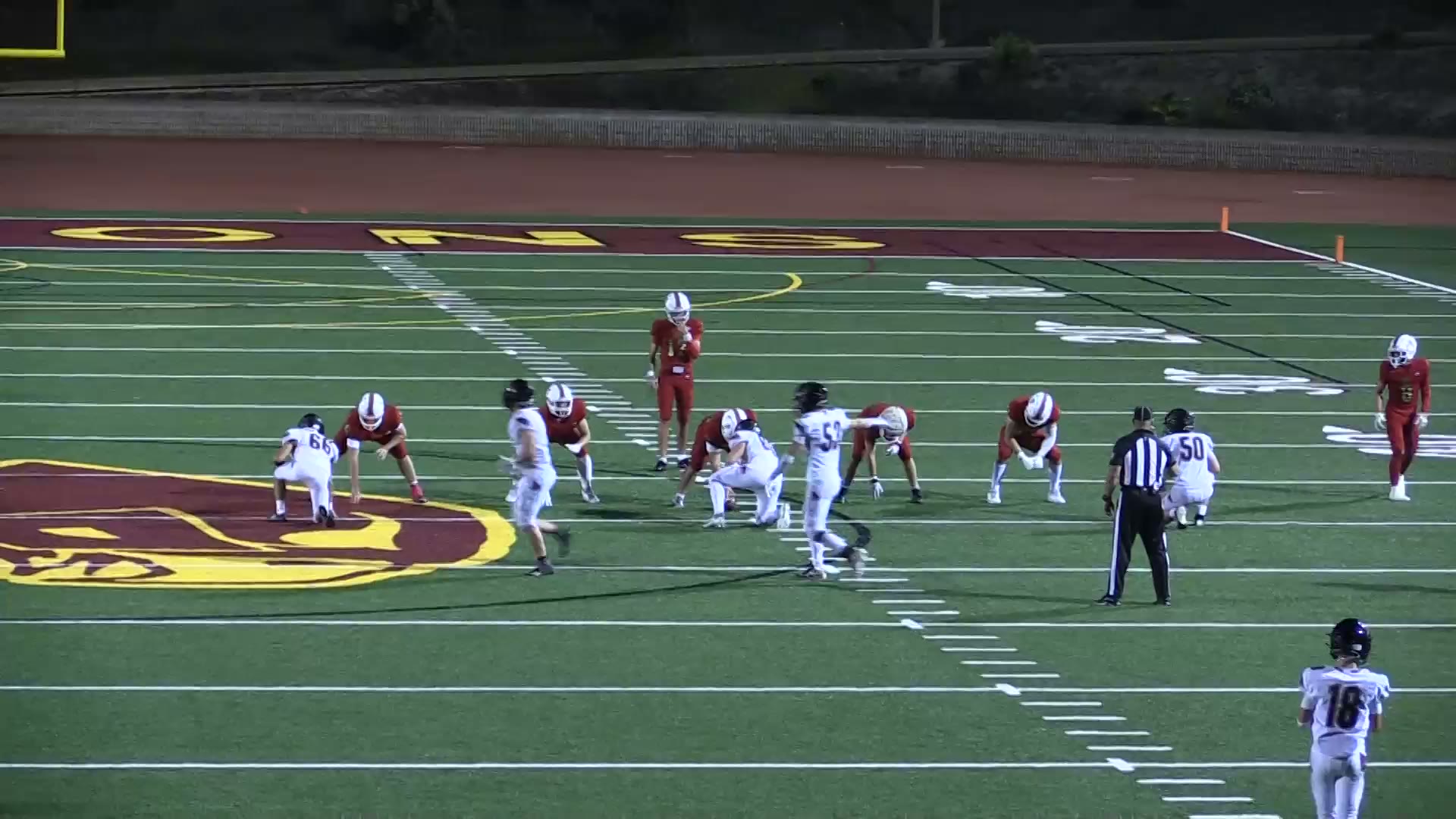
67-yard TD. FS was too far outside and didn't close at an angle on the B PARROT run. On Split formation, the FS must take a 45-degree angle toward the ball carrier's path. Don't over-run the tackle — be the last wall. Set your feet and make the RB cut back into your pursuit. Don't give up the sideline.
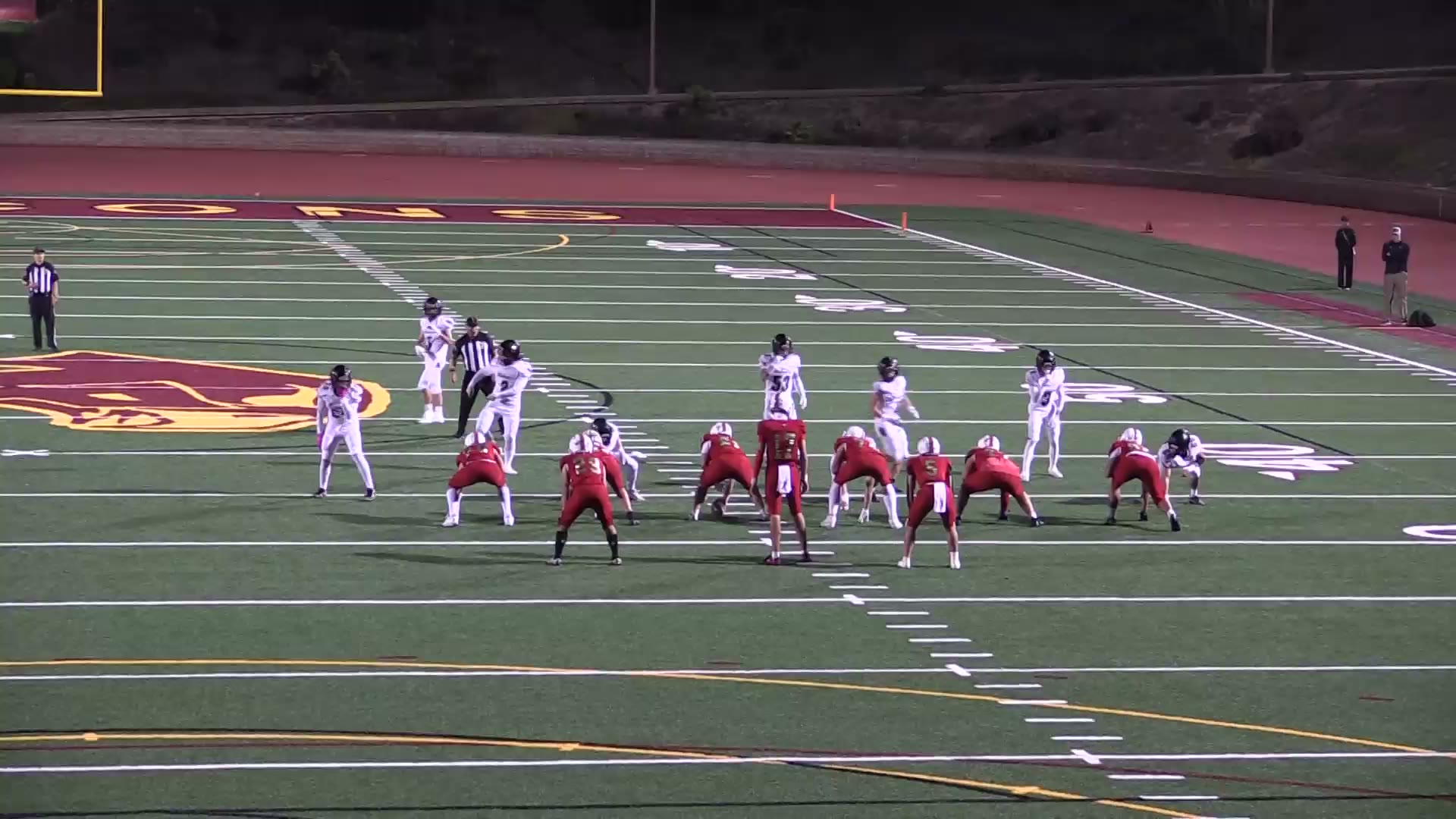
YAMAHA motion = run 100% of the time. When you see YAMAHA, take a half-step toward the run side at the snap. Don't over-commit — take one step, read the guard's first step, then attack the correct gap. This is a teachable rep: motion read leads directly to run support leverage.
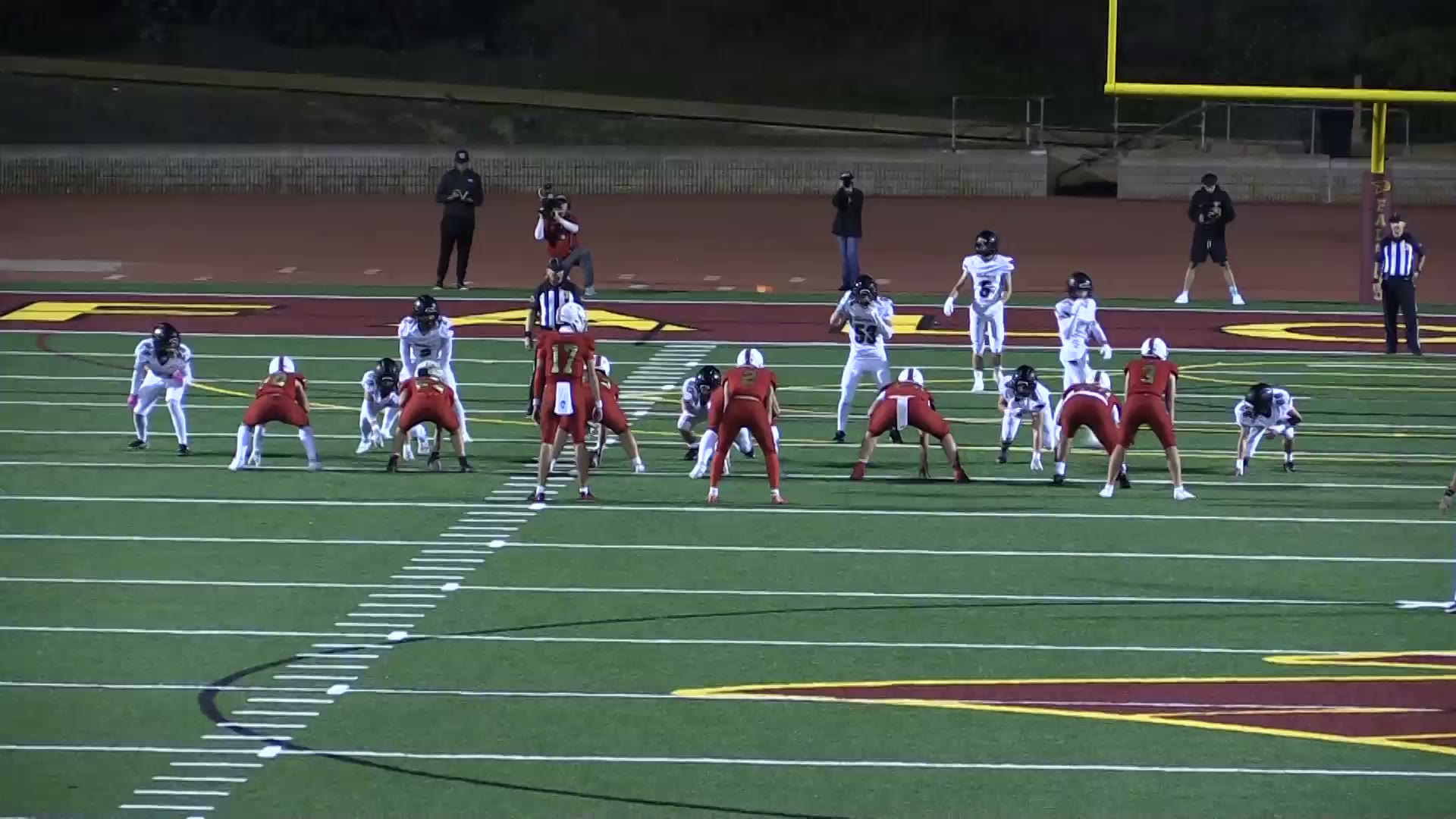
FIRE formation (spread 4-wide) — X receiver runs a go route (JAILBREAK). FS must stay in the deep third over the X side. Don't get sucked inside by the slot route. Stay over the top, force the completion underneath if it comes. The X JAILBREAK goes for 18 yards — FS should have been 12+ yards to bracket this.